Tropical Coconut Cream Cake
Indulge in the tropical goodness of this Coconut Cream Cake, a delightful dessert that captures the essence of paradise. Each bite is a harmonious blend of sweet coconut flavor with a moist cake base. Topped with fresh fruits, it's perfect for summer gatherings or any celebratory occasion. Bring a touch of the tropics to your table with this easy-to-make cake.


Why This Tropical Coconut Cream Cake Recipe Works
This Tropical Coconut Cream Cake stands out due to its unique combination of textures and flavors. The use of both all-purpose and cake flour creates a light, airy cake that contrasts beautifully with the creamy coconut layers. The addition of shredded coconut throughout the batter enhances the tropical flavor profile.
Each bite of the cake is a delight, featuring a fluffy crumb and a rich, creamy frosting. The whipped cream topping adds a delightful lightness, while the fresh fruits provide a burst of flavor. This cake is not only delicious but also visually stunning, making it perfect for special occasions.
💡 Professional Tip
For the best result, use high-quality coconut milk and fresh fruits. Ensure your heavy cream is cold when whipping to achieve the right consistency.
Frequently Asked Questions
Yes, you can prepare the cake layers a day in advance. Once cooled, wrap them tightly in plastic wrap and store in the refrigerator. Assemble the cake with whipped cream and fruits on the day you plan to serve it for the best presentation.
If you don't have coconut milk, you can use whole milk or almond milk as a substitute. For a richer flavor, consider adding a splash of vanilla extract to the substitute milk. Keep in mind that the taste will be slightly different.
Baking is the best cooking method for this cake. It allows the ingredients to meld beautifully, creating a moist and fluffy texture. Avoid using alternative methods like steaming, as it may lead to a denser cake.
To prevent dryness, ensure you do not overbake the cake. Check for doneness a few minutes before the suggested baking time. Additionally, adding coconut milk provides moisture that helps keep the cake tender.
The cake is done when a toothpick inserted in the center comes out clean or with a few moist crumbs. The cake should also spring back when lightly pressed in the center.
This cake pairs wonderfully with a scoop of vanilla ice cream or a dollop of additional whipped cream. A refreshing tropical fruit salad on the side enhances the experience.
Yes, you can make it gluten-free by using a gluten-free all-purpose flour blend. Ensure that all other ingredients are also gluten-free.
Store any leftover cake in an airtight container in the refrigerator for up to 3 days. For best results, consume it within the first couple of days. If freezing, wrap slices individually and store in a freezer-safe bag for up to a month.
Recipe Troubleshooting Guide
Cake Sinking in the Middle
Problem: If your cake sinks in the middle, it may have been underbaked.
Solution: Make sure to check for doneness and adjust baking time as needed. Additionally, avoid opening the oven door too often while baking.
Overly Sweet Cake
Problem: If your cake tastes too sweet, it may be due to excess sugar in the recipe.
Solution: You can balance the sweetness by serving the cake with a tart fruit topping or a dollop of unsweetened whipped cream.
Dry Texture
Problem: A dry cake can result from overmixing the batter or overbaking.
Prevention: Mix the batter just until the ingredients are combined and check for doneness early to prevent overbaking.
Frosting Melting
Problem: If your whipped cream frosting is melting, it may be due to warm temperatures.
Recovery: Keep the cake refrigerated until serving and consider using stabilizer for the whipped cream to maintain its structure.
Uneven Baking
Problem: Uneven baking can occur if the oven temperature is inconsistent.
Prevention: Use an oven thermometer to ensure accurate temperature and rotate the pans halfway through baking for even cooking.
Flavor Balance Issues
Too Sweet: If the cake is too sweet, consider adding a tart fruit topping to counterbalance the sweetness.
Too Salty: If the cake is too salty, ensure to balance the flavors by serving it with a sweet and creamy topping.
Bland: If you find the cake bland, enhancing it with a splash of coconut extract can elevate the flavor.
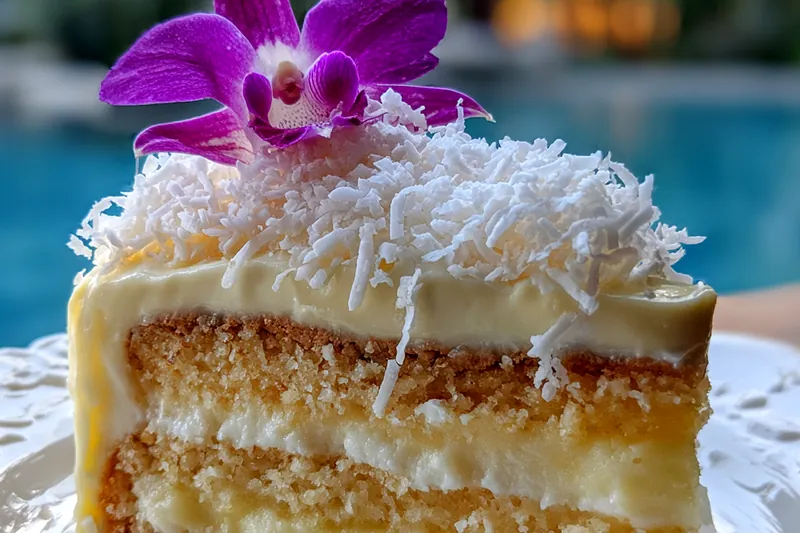
Choosing the Best Ingredients for Tropical Coconut Cream Cake
Selecting quality ingredients is crucial for ensuring the best flavor and texture in your cake. Look for fresh, shredded coconut and high-quality butter for the best results. Using pure coconut milk will enhance the cake’s richness.
Prepare your ingredients by measuring accurately and ensuring everything is at room temperature, particularly the butter and eggs. This helps in achieving a smooth batter that incorporates air effectively.
Essential Ingredient Notes
- Coconut Milk: Coconut milk is a key ingredient, adding moisture and a rich coconut flavor. Opt for full-fat coconut milk for a creamier texture in the cake.
- Unsweetened Shredded Coconut: Using unsweetened shredded coconut ensures the cake is not overly sweet. It adds texture and flavor without compromising the cake's balance.
- Heavy Cream: Heavy cream is essential for making the frosting light and fluffy. Ensure it's well-chilled before whipping for the best volume.
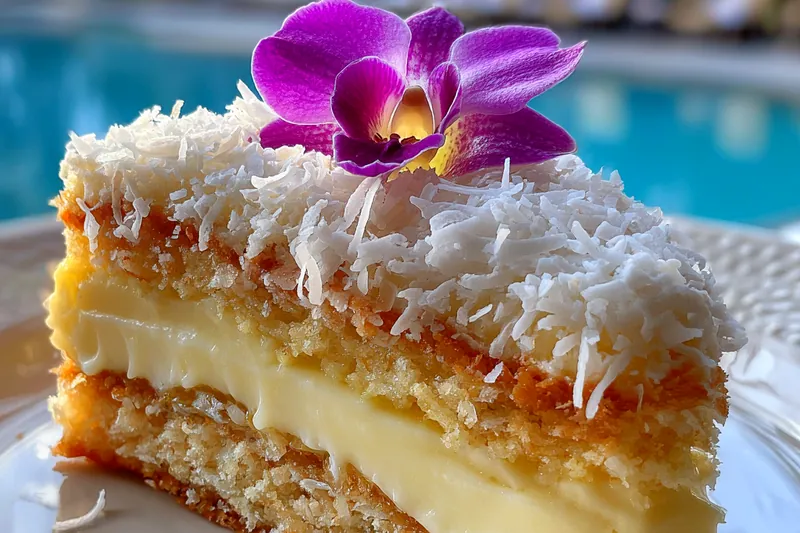
Mastering the Cooking Technique
The key to mastering this cake lies in the mixing technique. Be careful not to overmix the batter, as this can lead to a dense texture. Incorporate the wet and dry ingredients gently until just combined.
Timing is essential, so keep a close eye on the cake as it bakes. The top should be golden brown and spring back when touched lightly. Allow the cakes to cool completely before frosting to prevent melting.
The Secret to Perfect Tropical Coconut Cream Cake
The most important technique for a successful Tropical Coconut Cream Cake is to carefully monitor your baking time. Every oven is different, so check for doneness with a toothpick and adjust your baking time as necessary.
Tropical Coconut Cream Cake
📋 Ingredients
Sauce
- 1 cup coconut creamFor a rich and creamy topping
- 1/4 cup granulated sugarTo sweeten the coconut cream
- 1 teaspoon vanilla extractFor enhanced flavor
- 1 tablespoon lime juiceAdds a zesty kick
- 1/2 cup shredded coconutFor texture and decoration
Main
- 1 cup all-purpose flourFor the cake structure
- 1 cup cake flourHelps create a light and fluffy texture
- 1 cup unsweetened shredded coconutAdds coconut flavor throughout the cake
- 1/2 cup unsalted butter, softenedFor moisture and richness
- 1 cup granulated sugarSweetens the cake
- 3 large eggsGives structure and moisture to the cake
- 1 cup coconut milkAdds creaminess and coconut flavor
- 1 teaspoon baking powderHelps the cake rise
- 1/2 teaspoon baking sodaAids in leavening
- 1/4 teaspoon saltEnhances the flavors
Instructions
Preheat the Oven
Preheat your oven to 350°F (175°C) and grease two 9-inch round cake pans.
Mix Dry Ingredients
In a bowl, combine the all-purpose flour, cake flour, baking powder, baking soda, salt, and shredded coconut. Mix well.
Cream Butter and Sugar
In a large mixing bowl, cream the softened butter and granulated sugar together until light and fluffy.
Add Eggs and Vanilla
Beat in the eggs one at a time, then add the vanilla extract and mix until well combined.
Incorporate Dry Ingredients
Gradually add the dry ingredients to the butter mixture, alternating with the coconut milk, starting and ending with the dry ingredients. Mix until just combined.
Bake the Cake
Divide the batter evenly between the prepared cake pans and smooth the tops. Bake for 25-30 minutes or until a toothpick inserted in the center comes out clean.
Cool the Cakes
Let the cakes cool in the pans for 10 minutes before transferring to wire racks to cool completely.
Prepare the Whipped Cream
In a chilled bowl, whip the heavy cream with powdered sugar until soft peaks form.
Assemble the Cake
Once the cakes are cooled, place one layer on a serving plate, spread a layer of whipped cream on top, and add the second cake layer. Frost the top and sides with the remaining whipped cream, then garnish with fresh tropical fruits.
Recipe Notes & Tips
Make-Ahead Instructions
You can bake the cake layers a day in advance. Just wrap them tightly in plastic wrap and refrigerate until ready to assemble.
Serving Suggestions
Serve the cake with a scoop of coconut ice cream on the side for an extra tropical touch.
Recipe Variations
For a different flavor, try adding crushed pineapple or adjusting the fruit toppings based on seasonal availability.