Creamy Chicken Orzo with Asparagus and Parmesan
Experience comfort in a bowl with this Creamy Chicken Orzo with Asparagus and Parmesan. This delightful dish combines tender chicken, al dente orzo, fresh asparagus, and a rich, creamy Parmesan sauce into a single, satisfying meal. Perfect for a weeknight dinner yet elegant enough for guests, it’s a versatile recipe that promises to become a family favorite. Get ready to impress with minimal effort and maximum flavor!

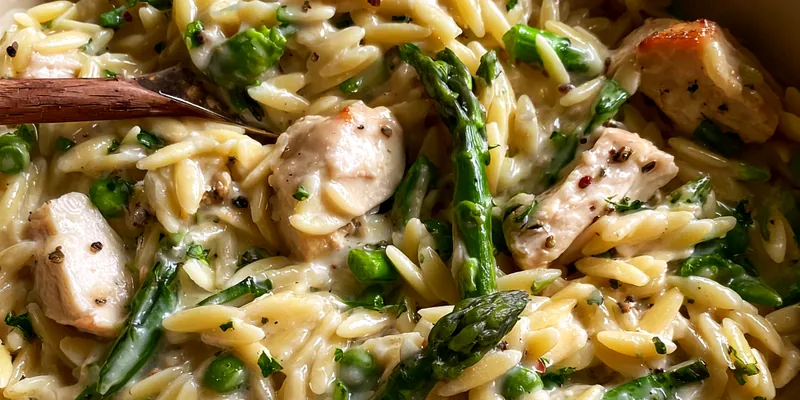
Why This Creamy Chicken Orzo with Asparagus and Parmesan Recipe Works
This recipe stands out for its incredible balance of convenience and flavor. By cooking the orzo directly in the chicken broth, it absorbs all the savory goodness, resulting in a deeper, more cohesive taste profile than boiling separately. The chicken is seared first to develop a beautiful crust and seal in juices, then returned to the pan to finish cooking with the pasta, ensuring every bite is moist and flavorful.
The addition of fresh asparagus adds a welcome pop of color and a delicate, slightly sweet crunch that beautifully contrasts with the creamy sauce. Finishing with Parmesan cheese not only provides a salty, umami depth but also helps to thicken the sauce to that perfect velvety consistency. It’s a complete meal in one pan, minimizing cleanup while maximizing deliciousness, making it an ideal choice for busy weeknights.
💡 Professional Tip
For the best texture and flavor, avoid overcooking the orzo. It should be al dente, meaning it still has a slight bite to it. Also, when searing the chicken, ensure not to overcrowd the pan; this allows for proper browning and caramelization, which adds significant depth of flavor to the entire dish.
Frequently Asked Questions
While it's best enjoyed fresh, you can certainly prepare components ahead. Cook the chicken and sauté the aromatics. Store them separately in the refrigerator. When ready to serve, reheat the chicken, then proceed with cooking the orzo, broth, cream, and asparagus. Stir in the pre-cooked chicken at the end. The creaminess might slightly reduce upon reheating, but it will still be delicious.
If you don't have orzo, you can use other small pasta shapes like ditalini, acini di pepe, or even broken spaghetti, though cooking times may vary slightly. For a gluten-free option, use a gluten-free orzo or a small rice pasta, adjusting the liquid as needed as some gluten-free pastas absorb more or less liquid.
The dish is done when the orzo is al dente (tender with a slight chew) and most of the broth has been absorbed, creating a creamy sauce. The asparagus should be tender-crisp and bright green, not mushy. The chicken should be cooked through with an internal temperature of 165°F (74°C).
Freezing is not recommended for this dish. The heavy cream and pasta can separate and become grainy or mushy upon thawing and reheating. The asparagus will also likely lose its firm texture. It's best to enjoy this recipe fresh or refrigerate for a day or two.
This dish is quite hearty and complete on its own. However, if you'd like to add a side, a simple green salad with a light vinaigrette or some crusty garlic bread would complement it perfectly. A glass of crisp white wine, like a Sauvignon Blanc or Pinot Grigio, would also pair wonderfully.
Leftovers can be stored in an airtight container in the refrigerator for up to 2-3 days. The sauce may thicken further and the orzo will absorb more liquid, so you might need to add a splash of chicken broth or milk when reheating to restore its creamy consistency.
While you can prep ingredients like dicing the onion and cutting chicken/asparagus, the full dish is best made just before serving. The orzo continues to absorb liquid and can become too soft or dry if cooked too far in advance. If absolutely necessary, follow the steps up to adding the broth, then finish with cream, asparagus, and cheese just before serving.
To reheat, place individual portions in a microwave-safe dish and microwave on medium power, stirring occasionally, until heated through. Alternatively, reheat in a skillet over medium-low heat on the stovetop, adding a splash of chicken broth or milk to loosen the sauce and restore creaminess.
Recipe Troubleshooting Guide
Too Dry
Problem: The orzo has absorbed too much liquid, and the dish feels dry, not creamy.
Solution: If your orzo is too dry, simply add a bit more warm chicken broth or heavy cream, 1/4 cup at a time, until it reaches your desired creamy consistency. Stir well and gently heat through.
Not Crispy Enough
Problem: The chicken didn't get a nice golden-brown sear.
Solution: Ensure your pan is adequately hot before adding the chicken, and don't overcrowd it. Cook the chicken in batches if necessary to allow for proper caramelization and a crispy exterior.
Overcooked
Problem: The orzo is mushy, or the asparagus is limp and dull green.
Prevention: To prevent overcooking, monitor your cooking times closely. Cook orzo until just al dente, and add asparagus towards the end of the cooking process, aiming for tender-crisp. Taste test frequently during the last few minutes of cooking.
Undercooked Center
Problem: Chicken pieces are still pink in the middle.
Recovery: Always ensure chicken is cooked through. You can cut into the largest piece to check for doneness, or use a meat thermometer (internal temperature should be 165°F/74°C). If still undercooked, you can gently simmer it in the sauce for a few more minutes.
Burnt Exterior
Problem: The bottom of the orzo or aromatics are burning to the pan.
Prevention: Ensure you are using a heavy-bottomed pan and stirring frequently, especially after adding the orzo and broth. If simmering covered, reduce heat to very low. If burning starts, quickly reduce heat and add a splash more broth to deglaze.
Flavor Balance
Too Sweet: Not applicable to this savory dish.
Too Salty: If too salty, add a squeeze of lemon juice or a small amount of unsalted chicken broth/water to dilute. A small dollop of plain yogurt or sour cream can also help.
Bland: If bland, add more salt and freshly ground black pepper. A pinch more dried thyme or a dash of onion powder can boost flavor. A sprinkle of red pepper flakes can also add a subtle kick.

Essential Ingredients for Creamy Chicken Orzo with Asparagus and Parmesan
The heart of this Creamy Chicken Orzo lies in its quality ingredients. Boneless, skinless chicken breasts provide lean protein, while orzo pasta gives it a comforting, rice-like texture. Fresh asparagus adds a vibrant green color and crisp-tender bite, balancing the richness of the creamy sauce. These core components work together to create a satisfying and flavorful meal.
Don't underestimate the impact of good quality broth and real Parmesan cheese; they are crucial for developing the depth of flavor in the sauce. Heavy cream is essential for that luxurious, velvety texture that makes the dish so appealing. Fresh garlic and onion provide an aromatic base, and a touch of dried thyme brings a subtle herbaceous note that ties everything together perfectly.
Essential Ingredient Notes
- Chicken Breasts: For tender, flavorful chicken, ensure it's patted dry before searing. This helps achieve a golden-brown crust, which adds a layer of depth to the dish. Cut into uniform 1-inch cubes for even cooking.
- Orzo Pasta: Orzo cooks quickly and absorbs liquids beautifully. For optimal texture, toast the dry orzo briefly in butter before adding the broth. This enhances its nutty flavor and prevents it from becoming gummy.
- Asparagus: Choose bright green, firm asparagus spears. Snap off the woody ends before cutting into 1-inch pieces. Add it towards the end of cooking to maintain its vibrant color and tender-crisp texture.

Step-by-Step Cooking Process
Crafting this creamy chicken orzo is a straightforward and rewarding process. It begins with searing the chicken to develop rich flavors, followed by sautéing aromatics to build a fragrant base. The key is to cook the orzo directly in the chicken broth, allowing it to slowly absorb the liquid and flavors, similar to a risotto, creating a truly integrated and creamy texture.
The timing is crucial when adding the asparagus and heavy cream; the asparagus should be cooked just until tender-crisp, preserving its vibrant color and slight bite. The heavy cream, combined with Parmesan, creates a luscious sauce that coats every grain of orzo and piece of chicken. Follow these steps for perfect results every time, ensuring a smooth, creamy, and incredibly flavorful dish.
Key Technique for Perfect Creamy Chicken Orzo with Asparagus and Parmesan
The most important technique for this recipe is cooking the orzo like a risotto. By toasting the orzo first and then gradually adding the chicken broth, the pasta slowly absorbs the liquid, releasing its starches to create a naturally creamy sauce without relying solely on the heavy cream. This method infuses the orzo with maximum flavor and results in a wonderfully rich and velvety texture.
Creamy Chicken Orzo with Asparagus and Parmesan
📋 Ingredients
Main Ingredients
- 1 tbsp unsalted butterFor sautéing
- 1 medium yellow onionFinely diced
- 2 cloves garlicMinced
- 4 cups chicken brothLow sodium preferred
- 1 cup heavy creamFor richness
- 1/2 cup grated Parmesan cheesePlus more for serving
- 1/4 cup chopped fresh parsleyFor garnish
For the Sauce
- 1.5 lbs boneless, skinless chicken breastsCut into 1-inch cubes
- 1 tbsp olive oilFor searing chicken
- 2 cups orzo pastaUncooked
- 1 lb asparagusTrimmed and cut into 1-inch pieces
- 1/2 tsp dried thymeFor seasoning
- SaltTo taste
- Freshly ground black pepperTo taste
Instructions
Prepare Chicken
Pat chicken dry with paper towels. Season generously with salt, pepper, and dried thyme. Heat olive oil in a large skillet or Dutch oven over medium-high heat.
Sear Chicken
Add chicken to the hot skillet in a single layer. Cook for 3-4 minutes per side, until golden brown and cooked through. Remove chicken from the skillet and set aside.
Sauté Aromatics
Reduce heat to medium. Add butter to the same skillet. Add diced onion and cook for 3-5 minutes, until softened and translucent. Add minced garlic and cook for another minute until fragrant.
Toast Orzo
Stir in the orzo pasta. Cook for 2-3 minutes, stirring constantly, until the orzo is lightly toasted and smells nutty.
Cook Orzo
Pour in the chicken broth, stirring well to scrape up any browned bits from the bottom of the pan. Bring to a simmer, then reduce heat to low, cover, and cook for 8-10 minutes, or until most of the liquid has been absorbed and the orzo is al dente.
Add Cream and Asparagus
Stir in the heavy cream and asparagus. Return the cooked chicken to the skillet. Continue to simmer gently, uncovered, for another 5-7 minutes, or until asparagus is tender-crisp and the sauce has thickened slightly.
Finish with Parmesan
Remove from heat. Stir in 1/2 cup grated Parmesan cheese and fresh parsley until well combined and the cheese has melted into the sauce.
Season and Serve
Taste and adjust seasoning with additional salt and pepper if needed. Serve immediately, garnished with extra Parmesan cheese and fresh parsley.
Recipe Notes & Tips
Storage Tips
Store any leftover Creamy Chicken Orzo in an airtight container in the refrigerator for up to 2-3 days. Note that the orzo will continue to absorb sauce and may become thicker. When reheating, you might want to add a splash of chicken broth or milk to bring back its creamy consistency.
Serving Suggestions
This dish is a complete meal on its own, offering protein, carbs, and vegetables. However, it pairs beautifully with a simple side salad dressed with a light vinaigrette, or a slice of crusty bread to soak up any extra sauce. A crisp, dry white wine like Pinot Grigio or Sauvignon Blanc makes an excellent accompaniment.
Recipe Variations
Feel free to customize this recipe! You can swap chicken for shrimp or even make it vegetarian by omitting meat and adding extra vegetables like spinach, mushrooms, or bell peppers. For an extra cheesy kick, try adding a blend of Italian cheeses. A pinch of red pepper flakes can also add a nice subtle heat.